
Bring your health history
Discuss medical conditions, current medications, prior weight-management care, and the outcomes or barriers you want to address.
GLP-1 care · Austin, Texas
Use a consultation to understand GLP-1 medication options, review your health history and current medications, and decide what support belongs in your plan.
Prescription evaluation with routine and follow-up planning

GLP-1 medication options
Semaglutide and tirzepatide are prescription options that require an individual clinical discussion.
A Blue Tree Health provider reviews your health history, current medications, goals, and prior weight-management efforts before discussing GLP-1 care. If a medication is appropriate, the plan also addresses food, activity, routines, and follow-up.
Your GLP-1 consultation and follow-up
Start with clinical questions, then use follow-up visits to review medication experience and the habits supporting your plan.
Discuss medical conditions, current medications, prior weight-management care, and the outcomes or barriers you want to address.
Your provider explains the differences that matter between semaglutide, tirzepatide, and other approaches in the context of your care.
If a prescription is appropriate, identify the food, activity, and routine changes that can support the program.
Use follow-up to review questions, side effects, progress, and changes in your daily routine or goals.
What the GLP-1 discussion covers
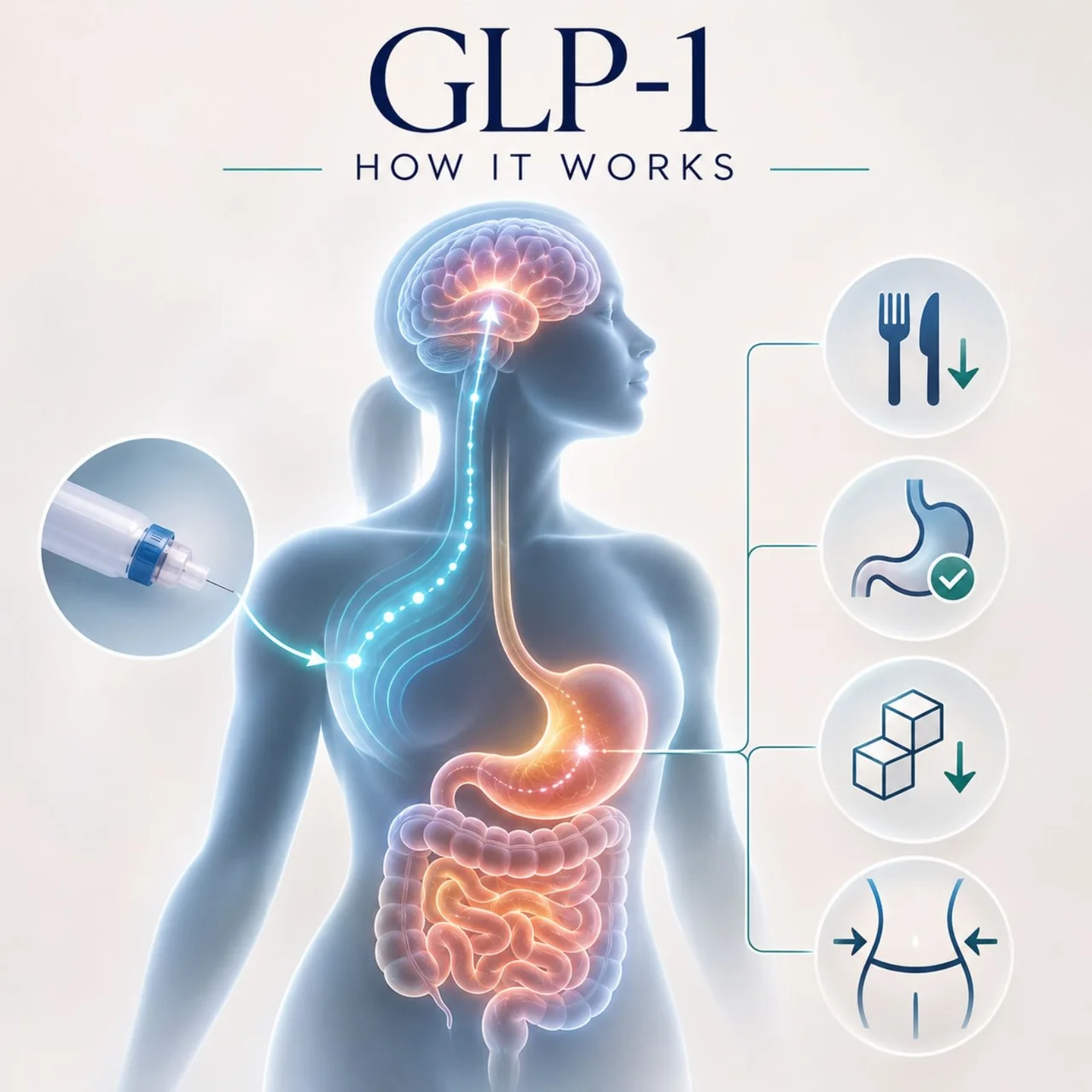
A GLP-1 consultation includes more than choosing a medication. It considers medication safety, your current routine, and how follow-up will address questions and changes.
What GLP-1 care may include
Your provider determines which components are appropriate after reviewing your history and goals.
Review health history, current medications, and prior weight-management care before considering a GLP-1 medication.
Ask about semaglutide and tirzepatide and how their roles may differ in your individual plan.
Discuss eating patterns, activity, and routines that can be worked into your regular schedule.
Use return visits to report your experience, ask questions, and review whether the plan needs adjustment.
Weight loss & strength support
Many patients pair medical weight loss with Emsculpt NEO to strengthen and tone the abs, buttocks, arms, and thighs while they work toward body-composition goals.
Explore Emsculpt NEOQuestions, answered
GLP-1 refers to glucagon-like peptide-1, a hormone pathway targeted by certain prescription medications. A provider can explain how this medication class may relate to your weight-management plan.
They are different prescription medications. Your provider can explain their different mechanisms and discuss which options are relevant after reviewing your medical history, medications, and goals.
Care begins with a clinical review and medication discussion. If treatment is appropriate, you also discuss food, activity, routine planning, and follow-up for questions, response, or side effects.
Some patients experience mild nausea as they begin a prescription weight-loss program. Your provider will review your health history and check in with you throughout your program.
Coverage can vary by plan and medication. Ask the team what information is needed to clarify the next steps for the option you are considering.
Bring maintenance questions to follow-up. Your provider can discuss the habits, medication considerations, and next steps that apply to your ongoing plan.
Real results from patients. Individual results vary.
Schedule a consultation
Book a consultation to review your health history, current medications, goals, and questions. Your provider can explain the appropriate next steps and whether a program may fit.